Helping Our Students Find Their Voice

There was a very interesting article in Dance Magazine, in which the author Nancy Wozny queries: “Has the quest for versatility erased dancers’ movement signatures?”. I’ve never heard this question posed in quite this way. I have been bemoaning what I have called a “loss of artistry”. Dancers no longer seem to have a unique voice and I have written numerous articles on cultivating this unique voice; this artistry while training technique. But this concept of “erasing a dancer’s movement signature” very eloquently expresses exactly what I’ve been talking about. Ms. Wozny hypothesizes that the quest for versatility is the culprit; and that may be true. But I believe that this is only a very small part of problem.


Mikhail Baryshnikov famously said: “I don’t try to dance better than anyone else. I only try to dance better than myself.” And I believe that this is the source of his unique artistic vision.

 
Young dancers today spend an enormous amount of time on social media, watching the “stars” that they follow on Facebook and Instagram. They long to be like their idols and they copy what they see; putting their energy into dancing exactly like these “stars”… or perhaps even BETTER. But what they are looking at, what they are aspiring to, is the quantifiable: the length of the balance, the height of the leg, the number of pirouettes. And these quantifiables are often the basis of competition judging. 


Although I work primarily in the preprofessional/conservatory facet of the dance industry, I am a frequent guest teacher at competition studios and I believe that competitions have much to offer dancers (and I’ve already discussed this in previous articles). But when it comes to developing artistry, a unique voice, a “movement signature”, I believe that competitions could be part of the problem. When I watch group competition pieces I am always stunned by the miraculous unison; the incredible uniformity in the dancing. And this “sameness” is rewarded in the judging. Similarly, when one watches videos of examinations and classes at the great academies we see that same uniformity. All the bodies are pretty much identical. Every movement, nuance, gesture, tilt of the head  is meticulously sculpted and studied and honed. This uniformity; this “copying” of detail is not at all the same thing as the development of  artistry or a “movement signature”. There was a recent interview with an ABT principal in which she stated that (and I’m paraphrasing) contemporary styles allow her to express what she has inside her…but when she dances classical ballet she is trying to “replicate what the great ballerinas before her have done.”


And right here is our problem. Students are copying their insta-celebrities. Competition dancers are striving for staggering unison. Great academies are selecting for extreme body uniformity and maddeningly and meticulously training finely honed details. And sadly, and shockingly, ABT principals are attempting to replicate the great ballerinas of the past. And we wonder why there seems to be no great ARTISTS any more. Well, I believe that our industry is training the artistry right out of the dancer.
I have always taught my students that our bodies are our instruments and our technique allows us to use these instruments. An audience will never be truly moved by watching technique. As we train we must each search for a way to make the work personal. There should always be a quest to say something new with each step; to use our bodies and our technique to breathe life into the choreography and to make the choreography, the music and the artistry a unified whole. As most of you know, I still take class regularly and I am always looking for something new. When I was about 45 years old I found a way to pull up just a bit more in my standing hip that gave a unique look to my retire. When I was about 55 I discovered a little nuance in the epaulment when executing tendu croise derrière that added an extra richness to the position. And now my retire and my tendu croise derrière don’t look like quite any one else’s. Using the music as a guide, I recently discovered a way to phrase a mazurka that gives it a little “something extra”. And every day I continue this search. I was taught by my teachers to “Feel the space”, Dance from the inside”, “Let the feeling cover the technique”, “Dance the sound…not the steps”. I pass these lessons onto my students. But I also teach them things that I have found on my own. I teach them to “dare to be still”, “find power in the simplicity”, “make the work YOURS”, “draw the audience in rather than shout the choreography out”. And as I continue to take class and I watch my colleagues I feel more and more that I am alone in my approach. 


The uniqueness of Pliesetskaya, Nureyev, Baryshnikov, Gregory, Kirkland, Makarova, Farrell and (as recent as) Wendy Whelan could never been created by copying. Copying creates…well…a copy. What will thrill an audience is an ORIGINAL. And every day I am striving to create one; the only way I know how.
More on Lara Spencer, Good Morning America and the Dance Community’s Response

And so the discussion of Lara Spencer’s comments on Good Morning America is turning into an ever growing swirling vortex of drama. Most of my colleagues are outraged. I have read social media posts that have demanded apologies. I have read social media posts that have called her apology “lame”. There are professionals in my industry who have called Ms. Spencer: A Bully, Dumb Ass, Stupid, Ignorant, Mean, Insensitive and some other names I prefer not to repeat. I have read dozens of posts calling for her to be fired. 


I so often find myself disagreeing with the majority of my colleagues; and that is actually how the idea for this blog and website was born. So, once again, I will respectfully disagree with what I have read from many of my fellow dance professionals and dance families. I know that this may anger some of the people who read this, but it is the discussion of the issues that I find so fascinating.


Most of my readers know my story, but for those who do not, I would like to briefly state that I was, for the first part of my life, a victim of what Ms. Spencer dished out on national television. I was raised in an environment where boys did not pursue careers in dance and I was the target of merciless bullies for my entire youth. Having not had the opportunity to train as a dancer until my late twenties, the kind of performing career that I longed for was an impossibility. By the time I had developed the artistry and technique that could get me hired by a major ballet company, I was too old to be hired by a major ballet company. I harbored anger over this for over 25 years; dwelling on the pain of wondering what “might have been”. I am now closer to 60 than I care to admit. Recently, a soloist in ABT told me that her goal was to dance like me. And as lovely and flattering as that compliment is…it just stirred up that pain all over again. So my comments, my point of view are not coming from a teacher, a retired dancer, a dance mom or an advocate against bullying. My comments and my point of view are coming from a victim of this precise way of thinking and acting. And my life, my career, my future were directly impacted by this environment.


Firstly, I do not believe that Ms. Spencer is stupid or ignorant. I believe that Ms. Spencer, like much of our country, is uninformed when it comes to ballet. It appears that she simply does not understand or have the slightest bit of knowledge as to what it takes to become a dancer, what dancers do or the passion that we feel for our work. She simply DOES NOT KNOW. And because she does not know, she said something cruel. And as a result she infuriated and entire industry and bullied a child. I truly do not believe that Ms. Spencer woke up that morning and said “I’m going to go on TV this morning, I’m going to infuriate an entire industry and I’m going to bully a defenseless six year old child.” I believe that since she was uninformed, she made a mistake. I agree that people who have the ear of society, people who are in the public eye should be held to a higher standard. But she made a mistake (and I have made many, many mistakes myself). And this was a BIG mistake. But I don’t believe that punishing her by simply terminating her contract will solve the problem or teach her and those like her anything at all. Simply firing her out of hand will teach her to never do this again. But, sadly, it will not teach her why. It will manage her behavior but will not get to the root of the problem. Many are saying that the apology is “lame”. Do I think that her apology was insufficient? Yes, I do. But how could it be any better when I believe she truly does not understand what she did. But if we take away her job, berate her in the media, call her names and refuse her apologies then we are, actually, not much better than she is; we become the bullies, she becomes the victim. And isn’t this precisely what we are fighting?


We are educators and this is a time where we have to be at our best. This is an opportunity for us to try to teach Ms. Spencer, Good Morning America, ABC, and the world at large about what we do as dancers and dance educators. This unfortunate incident has actually opened a door. It has given us a forum,  it has started a conversation that can teach the world what we do and what it means to us. I have always believed in teaching by example; and yelling, name calling and terminating contracts is not the example I want to set. I’m hoping that my thoughts, my writings, and the thoughts and writings of others in our industry will continue to be shared and read. If enough of us are engaging in TEACHING about what we do rather than screaming, name calling and berating our offenders, perhaps our words will ultimately reach the right ears and the right eyes. And perhaps the words of a victim (like me) will reach a bully (like Ms. Spencer) and perhaps we can start to make changes. If there were a way for me to reach the ears of Ms. Spencer, Good Morning America and ABC I would welcome the opportunity to start a real conversation. Unfortunately I, by myself, am too small and insignificant and my reach is too limited.


My life was filled with pain and disappointment due to people like Ms. Spencer. Many of those people were the people closest to me and truly believed that they were acting out of love and in my best interest. But that pain and disappointment lead me to leave the dance industry much too soon. When I returned to the dance world in my forties, and my body really began to betray me, the anguish of the lost opportunity was unimaginable. But then one day I was asked to do some substitute teaching. And I found a new passion. And the Joffrey Ballet School opened its doors, it’s arms and its heart to me. And that day my life was changed forever. 


The people around me, the people in my life who once were the source of the anguish, are now looking at me through new eyes. I have a career. I have the respect of my students, my colleagues and my readers. And I have finally, in my fifties, found happiness and fulfillment. Those people who were the unwitting bullies in my world now realize how their behavior impacted my entire life. I have taught them what it means to be a dancer, what it means to have a passion and what it means to follow one’s dream; no matter how ridiculous it may seem to someone else. And I didn’t teach them this by yelling, berating, chastising and name calling. I taught them by example. 

A Response to Lara Spencer

Dear Ms. Spencer,

I am deeply saddened by your comments and tone of voice when discussing Prince George’s ballet classes. Boys who study ballet have long been the target of bullying and sadly, they are rarely protected by adults and society at large in the way that other “marked” children have been protected. I find it surprising that a respected member of the media who has the public’s ear in the way that you do, would participate in shaming a child because he is a boy who dances. I have, as an adult man, walked away from a very lucrative health-care career to refocus my life on my passion for ballet. I’m a faculty member at The Joffrey Ballet School in New York City where every day I am privileged to help guide tomorrow’s professional ballet dancers into their careers. I was wondering what your thoughts would be on some of the decisions that I have made in my life. Although I hardly have the reach that someone in your position does, I am widely respected in my field and teach at a school which is one of our country’s great artistic national treasures. Here is an article that I have written on boys and their struggles in society when they choose to study ballet. In the event that this email actually makes its way to you, I do hope you can find time in your schedule to read it. I would be very curious to hear your thoughts. https://classicalballetandallthatjazz.com/2018/01/04/a-note-to-boys-who-dance-and-to-their-parents/

Selecting a Teacher

This is an article that I adapted from an earlier blog post. It was published in Danzin’ Magazine.

As we approach a new year of dance training, many parents and students in our industry will be looking for new teachers. Similarly, many schools, studios and conservatories will be looking to hire new faculty members. And finding the right teacher can be a very difficult process for both students and studios. It has come to my attention recently,  that many parents, students and studio owners are favoring young teachers who can still dance “full out” over older, perhaps more experienced teachers. Dance can not really be taught by simply “showing”. If showing and demonstrating was the primary necessary skill and talent, then one could simply learn to dance by watching videos of dancers… and we all know that isn’t possible. Many newer and younger teachers (not all) tend to “show”. Clearly they explain while they show but they tend to rely on “this is how you do it” and then demonstrate the step or combination. Of course they will give some “how-to” information and offer some corrections, but in my experience with many newer teachers, they tend to rely on their technical prowess to make their point. I know that I did. Then the years crept on and one day, no matter how hard I worked, no matter how many hours I put into the studio, my body betrayed me.

I believe that dancing is more about “what it feels like” than “what it looks like”. This idea has always informed my teaching, but as my body declined it became more and more apparent that I was going to need to become a more skillful explainer if I was going to have a career. Of course, when teaching beginners, a certain amount of demonstration is helpful; and perhaps even necessary. But one does not need to tendu like Baryshnikov to teach tendu.

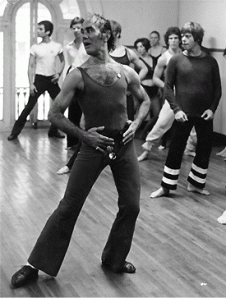
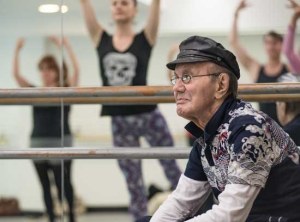
I remember the legendary Luigi talking about what he “felt” in class. He continued to demonstrate, as best he could, as his body aged. Clearly in his advanced years he couldn’t dance like he did in his youth. No one can. But he could still, though his teaching, take an absolute beginner and guide a dancer into a career. He explained everything from the point of view of what it felt like to him. He explained these feelings in excruciating detail. He explained what he did and how he did it with brilliant clarity. It was a painstaking, time-consuming process. And it took a student who was very hungry and very patient to “get it”. But once the student “got it” they had a depth of knowledge and understanding of dance that was richer, more profound, more expressive and more interesting than the students of the other methods that I encountered. He so often said to me “I don’t teach chorus dancers, I make stars”. And to a certain degree he did. Every student that passed through his studio was brought up and nurtured, through his technique, to become profoundly unique artist with a solid technique that supported their artistic expression. There certainly are young, fit, still performing dancers who are excellent teachers. But to think that a studio owner or parent would prefer a young teacher, still in “performing shape” to a seasoned and experienced professional simply because they can demonstrate “full-out” is disappointingly short sighted.

Building a dance technique and cultivating an artist is not a quick process. It takes endless hours of maddening repetition under the guidance of a teacher who knows how to impart the information. I implore studio owners and parents to weigh their choices very carefully. Careers can be made by a teacher and careers can be destroyed by a teacher. Do not select a teacher based on what they can show, because these teachers will create dancers who can “do”. Rather, select a teacher based on what they can teach, because these teachers will create dancers who can soar.

Luigi teaching in the studio
Luigi, well past the age of 80, still teaching